





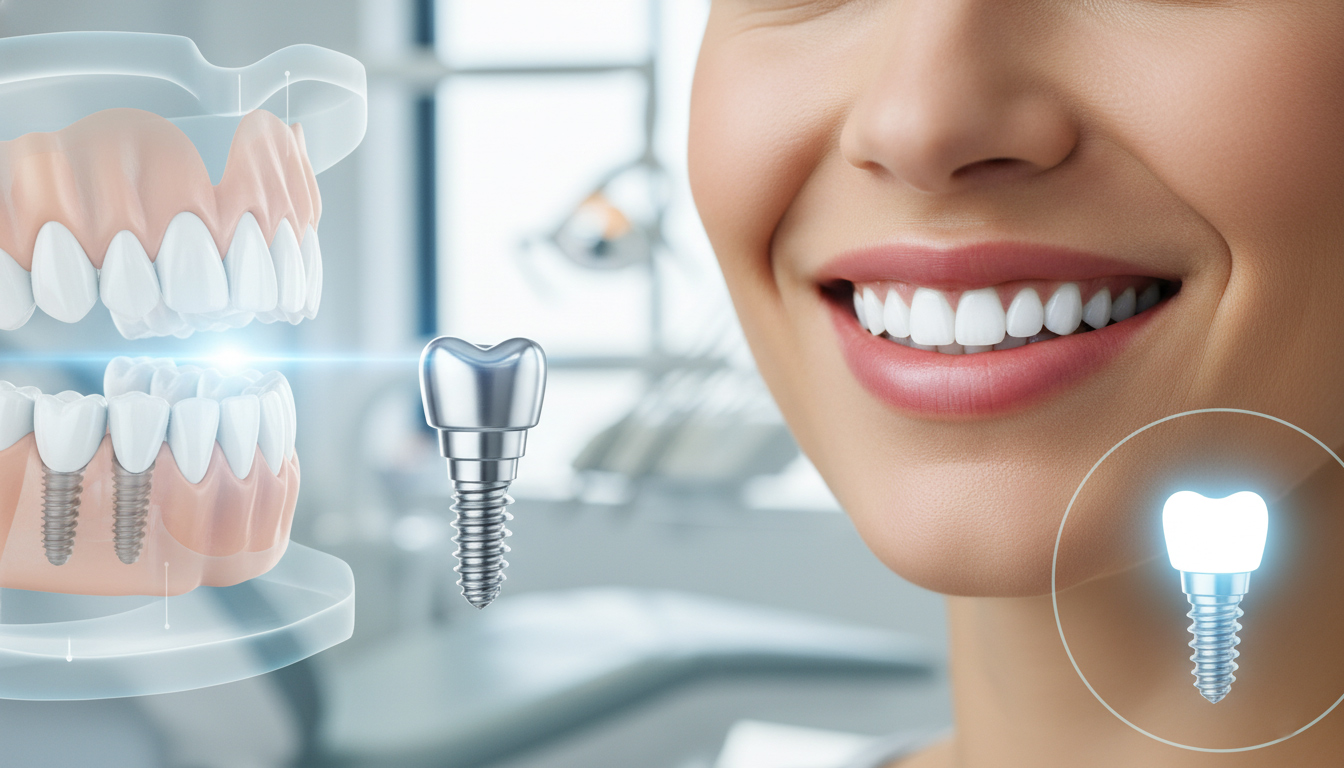


What is a dental implant?
A dental implant is a small screw (usually titanium) placed into the jawbone to replace the root of a missing tooth. A crown, bridge, or prosthesis is then attached to the implant, creating a look and function very similar to a natural tooth.
Unlike removable dentures, implants are fixed, don’t shift when speaking or chewing, and help preserve bone, preventing facial collapse over time.
Who is a candidate for dental implants?
Not everyone is an ideal candidate, which is why a professional evaluation is essential. In general, candidates should have:
- Good overall health: uncontrolled conditions (such as unmanaged diabetes or bleeding disorders) may increase risks.
- Sufficient bone quantity and quality: the bone must be able to support the implant; in some cases, a bone graft may be needed.
- Healthy habits: smoking and poor oral hygiene increase the risk of complications and infections around the implant.
During an evaluation, the dentist reviews your medical history, takes X‑rays or 3D scans, and designs a personalized plan.
How does the dental implant procedure work?
Although it may sound complex, the process usually follows well‑defined steps:
- Evaluation and planning: clinical exam, X‑rays, and digital planning if needed.
- Implant placement: the specialist inserts the screw into the bone under local anesthesia.
- Integration period: the bone fuses with the implant (osseointegration), which may take several weeks or months.
- Placement of the crown or prosthesis: once integrated, the final restoration is placed the part you see when you smile.
In many cases, patients can wear a temporary prosthesis during the process so they don’t remain “without a tooth” in visible areas.
Benefits and risks you should know
Main benefits:
- Natural aesthetics: they blend seamlessly with your other teeth.
- Improved function: they allow you to chew comfortably and confidently.
- Bone preservation: they help prevent bone loss after tooth extraction.
- Durability: with proper hygiene and regular checkups, they can last many years.
Potential risks (as with any procedure):
- Infection around the implant
- Failure of the implant to integrate with the bone
- Prolonged discomfort or pain
- Gum problems if proper hygiene is not maintained
This is why choosing an experienced clinic, following postoperative instructions, and attending regular checkups is essential.
Post‑implant care
Implants require the same commitment if not more than natural teeth:
- Daily brushing and flossing or use of interdental brushes
- Avoiding tobacco, which increases the risk of implant failure
- Regular checkups to monitor gums, bone, and the prosthesis
- Professional cleanings as recommended by your dentist
Are dental implants right for you?
The best way to know is through a personalized evaluation. A professional will assess your case, your aesthetic and functional expectations, and explain the available alternatives.
At a clinic like BBD Dental Care, the goal is not just to replace a tooth, but to restore a functional, aesthetic, and long lasting smile with a plan tailored to you.


